Kid Won't Pass the Ball in Soccer? Coaching Three Common Player Problems
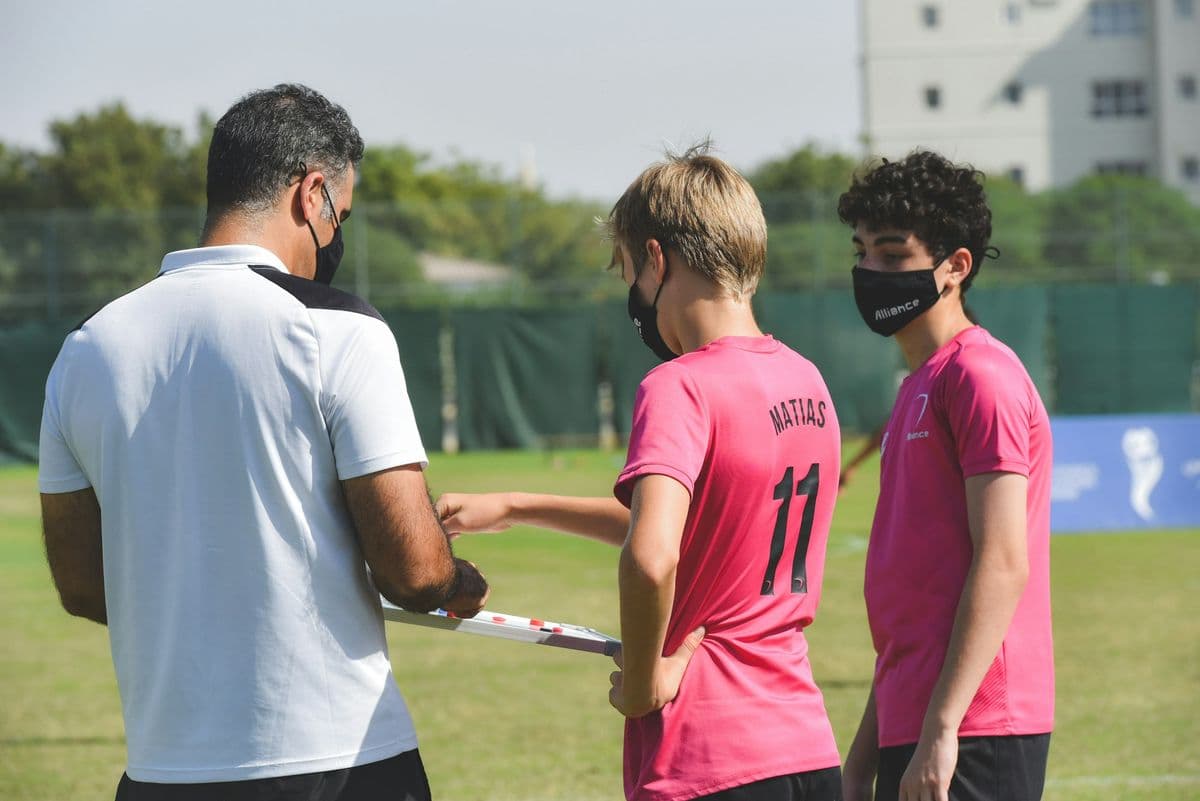
If a kid won't pass the ball in soccer, give them a teammate who can help and let them choose when to use that help. If one child scores every goal, increase their challenge. If a child hides on the pitch, start with a smaller game and an achievable target. The FA's guidance supports adjusting the task to the player. A team-wide restriction is not the only option.
These are games for the foundation phase, ages 5 to 11 in FA language. For US coaches, that includes the U6, U8 and U10 years. Start with what the child can currently do, especially when coaching a mixed ability U9 group.
Kid won't pass the ball in soccer
What it looks like
Your player beats someone, keeps dribbling and loses the ball to the next defender. A teammate was free. You want to call for the pass before the same thing happens again.
Before you do, separate the missed option from the willingness to carry the ball. You can coach the first without taking away the second.
What the FA says about the youth soccer ball hog
The FA's guidance on moving with the ball says: "With younger or less experienced players, don't discourage them from being selfish with the ball." It continues: "Avoid yelling "pass" from the sidelines and encourage them to stay on the ball instead."
That needs the qualification from its guidance for five to eleven year olds: "Staying on the ball is about the player knowing they can keep the ball for longer." Then: "Now, that doesn't mean hogging or dribbling until possession is lost."
There is room to teach passing inside that advice. The player still needs to see the choice.
The fix: make help available
Our starting point is to ask the player to look up while they have room. Let them see where the defender and their support player are. Then play again without calling the answer from the side.
In the Manchester United U9 4v4 pilot, Rick Fenoglio warns: "players who are routinely instructed to play simply, eventually, will be only able to play simply."
That is a coaching argument, not proof that every passing condition is harmful. Our preference here is to avoid making a pass count the price of scoring. The Soccer Coach Weekly dribble-or-pass practice leaves the choice with the players, "allowing them to choose dribbling or passing."
1. One against one with support players
Put one player from each team in the middle. Their teammates support from the edge. A pass to a teammate swaps their jobs. The receiver comes in with the ball and the passer moves out.
 © CoachTruly.com
Why we use it: the pass gives someone else a turn in the contest. Keep the teams small, and watch whether the support player moves into view before asking the dribbler to find them.
2. One against one with a support player
Play 1v1 in an area with one support player outside. The player in possession can pass out, move and receive again. The defender tries to win the ball and take over possession.
 © CoachTruly.com
Watch for: the moment pressure makes a pass useful. Rotate the outside player on a timer so everyone gets to carry the ball and offer support.
3. Two against one
Two attackers face a defender and try to score. In the bank version, the goalkeeper passes to the defender, who passes wide to start the attack. A turnover lets the defending side attack the other end.
 © CoachTruly.com
One change worth making: use small groups on several pitches if you can. Ask the supporting attacker to offer a clear passing lane. Leave the ball carrier free to dribble when the defender protects the pass.
4. One against one with a joker and goalkeepers
The joker joins whichever player has possession and can score too. Play towards goals with goalkeepers. After a goal, restart through the scoring player's goalkeeper. The bank version also requires a pass after the defender wins possession.
 © CoachTruly.com
One change worth making: remove that compulsory pass for this session. We want the player to notice when help is useful. Keep the joker moving in support and rotate the role.
One kid scores all the goals
What it looks like
One player can beat everyone in the small sided game. Their team keeps winning. You are choosing between leaving it alone and inventing a rule that only applies to the scorer.
Start by watching what makes the task easy. Is there too much space? Can the defender get close? Does the player ever need to protect the ball or change direction?
What the FA says about mixed ability U9 coaching
The FA's growth and maturation guidance points out that, in a September-to-August age group, "those born in September are nearly a year older than those born in August."
A child's place in the age year is worth checking. It does not tell you why that particular child scores so often. Nor does a grassroots team sheet look like an academy sample.
For context, Bolckmans and colleagues studied 1,003 UK academy players from U9 to U16. Their birth-quarter distribution was "Q1 = 45.0% vs. Q4 = 9.8%". That shows an imbalance in the selected sample. It cannot identify the cause of one player's advantage in your Tuesday session.
The FA offers a practical adjustment: "you could put a more developed player on an underloaded team to increase their challenge while making it easier for others." Underloaded simply means having fewer players.
The fix: give the scorer a harder problem
The FA's challenge guidance says: "Got an excellent dribbler? Challenge them to get even better at dribbling." It also says: "Player challenges work best when designed for individuals".
That leaves plenty to try before banning their next goal. Add another defender. Offer a harder route. Ask them to protect possession under pressure.
The FA's article on challenging every player warns about one-size tasks: "This approach can be detrimental to player development, stifle motivation, confidence and self-esteem."
Soccer Coach Weekly's STEP advice gives a specific option: "for your superstar player, it could be to play a split pass between two opponents anytime they can". The condition depends on seeing that opportunity. You do not need to demand it on every possession.
Soccer Handbook puts the choice plainly: "Keep it optional. You want players choosing challenge." Offer the harder task and ask the player whether they want to try it.
5. One against two
Start the stronger attacker against two defenders. If the defenders win the ball, another attacker joins to make it 2v2. Rotate after the attack finishes.
 © CoachTruly.com
Why we use it: the scorer can still score. They now have a covering defender to consider as well as the first challenge. Check that the task remains possible before adding anything else.
6. One against two ball shielding
One player protects the ball against two opponents. Whoever wins possession becomes the player trying to keep it. After the ball goes out, the first player to reach it at the boundary takes possession.
 © CoachTruly.com
Watch for: the ball carrier moving the ball away from pressure. Keep rounds short and change the group if one player cannot get any time in possession.
7. Who's afraid of the defender?
Players dribble across an area while a defender tries to knock their balls away. A player who loses their ball joins the defenders. Nobody sits out. The final player keeping their ball wins the round.
 © CoachTruly.com
Our adaptation: offer the stronger player the first defending role. They start outnumbered. Give everyone a fresh ball when the round ends rather than carrying the same roles into the next one.
8. A game with jokers on the wings
The bank game is 3v3 with outside jokers helping the team in possession. Defenders cannot press those jokers outside the pitch.
 © CoachTruly.com
Our adaptation: put the stronger player on a team of two against three, keeping the wing support. That changes the numbers from the drawing. Watch whether the underloaded team can still build an attack, and restore equal teams if it cannot.
Shy child at soccer practice: when a child hides on the pitch
What it looks like
The player stays behind an opponent, passes immediately or drifts away from play. Ask them how the game feels before deciding what is wrong. Hiding from a pass does not tell you whether they are shy, unsure of the task or simply having a difficult evening.
What the FA says about smaller games
In Why you should try 3v3, the FA reports that "each outfielder had a whopping 71 touches on average. (Compare this to 57 for a 5v5 game we observed and 37 for a 7v7)."
The 3v3 observation was U9s playing for ten minutes on a 30x20 metre fenced pitch. These are observations from those games, not a promised touch count for your quiet player. They are a reason to try reducing the numbers and watch who gets involved.
For questions, the FA's social skills guidance suggests you "give them a heads-up beforehand so they can prepare their answer." Another option is to "only ask them questions when they're in a small group."
The fix: one reachable target
Dave Clarke's advice for a player who hides starts with "easy ones at first like can he make two tackles in the first half". Later, "can he play the ball forward three times in the first half."
Choose something the player agrees they can attempt. Our preference is to discuss it quietly with them. That is our delivery choice; Clarke does not specify who should know the target.
Keep changing where they play too. The FA's position guidance says: "Use your training sessions to allow players to experience different positions."
9. A basic 3v3 game
Set up goals and play with small teams. Start with ordinary scoring. Agree the player's individual target before the game, then watch for attempts without announcing a running total.
 © CoachTruly.com
Watch for: whether the child gets opportunities to try the target. If they never receive the ball, reconsider the teams before making the target harder.
10. One against one to four goals
Pair players and give each two goals to defend. A pass starts the attack. Winning the ball reverses the roles.
 © CoachTruly.com
Our adaptation: use one pitch per pair instead of waiting lines. Choose a partner who gives the child a contest they can take part in, and swap partners between rounds.
11. Dribbling king
Half the players have balls. Score by dribbling through gates under control. Players without a ball try to win one. You cannot score through the same gate twice in a row.
 © CoachTruly.com
Watch for: someone spending the whole round chasing. Our adjustment is to reset with different ball carriers, giving that player a turn starting in possession.
Where to find more
Choose one adjustment for one player, then see whether they can attempt something they could not attempt before. The games are in our free drill bank, with the original setups linked above.