Fun Games to End Soccer Practice: Seven Youth Football Session Enders
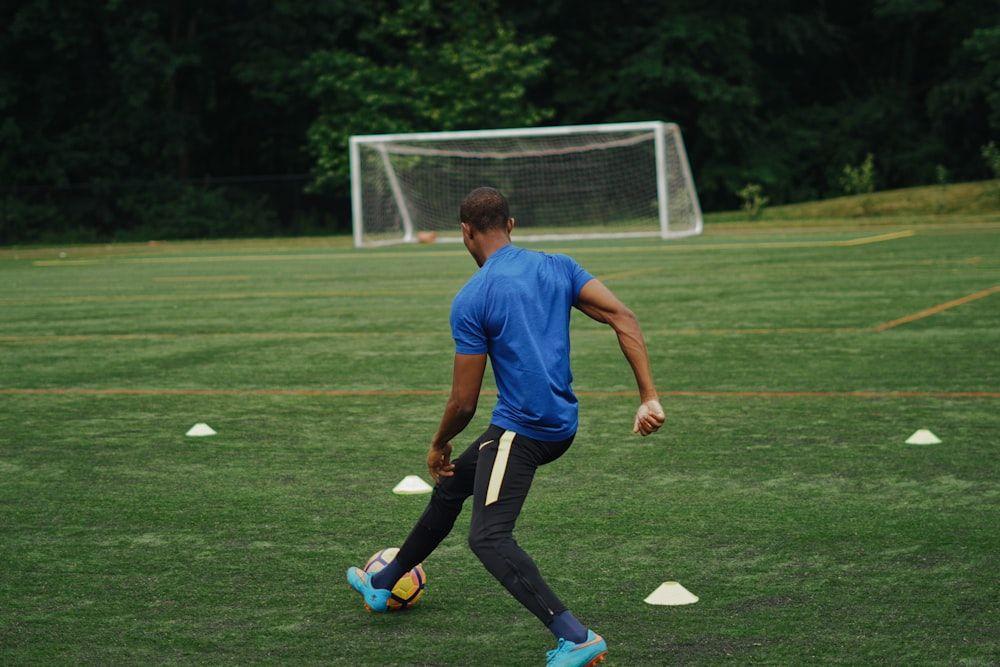
End soccer practice with a game, leave enough time to play it and keep the closing talk short. A match is a sound default. For a different finish, try a small tournament, a scoring challenge or one change to a familiar game. If the game eliminates players, give them another activity immediately. The seven options below include where those players go.
Use the simplest versions for U6 and U8. Add conditions for U10 players who already understand the game. All sit within the FA's foundation phase of ages 5 to 11, but choose by the players' experience too.
How to finish a football training session
The FA's session-structure guidance ends its carousel example with "bring the team back together and play a match". Its whole-part-whole example finishes with "another whole-group game where you award points for the type of finish used".
The FA's session-management advice is equally plain: "you can't go wrong if you just play a match. That's the game after all."
US Soccer's Play-Practice-Play explanation says: "The final stage of Play-Practice-Play is the game". It asks that "A coach should observe and guide using minimal dialogue".
Neither framework specifies a universal number of minutes. A US Soccer sample session divides its time 30/30/30. Its final game says: "Play for 30 minutes". About a third is a planning example from that session, not a federation rule for every practice.
Why give the end of practice some thought?
There is adult exercise evidence that how a session ends matters to later enjoyment. In a 2026 resistance-training study, Bastos and colleagues found that "the FS end was the only variable that consistently predicted enjoyment post- (15%) and 24 h after exercise (11%)."
FS means Feeling Scale, a rating of how someone feels. Those percentages describe prediction in that study. They are not increases in enjoyment, and the study does not establish what children remember after football practice.
Our practical choice is to protect time for a game the group knows. Avoid spending the last available minutes explaining a new set of rules.
End of practice soccer games: where eliminated players go
Footy4kids' session-planning advice says: "Don't play 'elimination games'". Its knockout-game guidance offers somewhere else to play: "they can play a 2v2 match".
Set that pitch up before the knockout starts. Use the bank's 2v2 tournament below as a side activity, keeping everyone playing regardless of results. If only one pair has moved across, they can play 1v1 until another pair joins.
 © CoachTruly.com
Seven fun games to end soccer practice
1. World Cup game for soccer practice
ACTIVEkids' World Cup game uses "teams of two" and says: "One player (or a coach) will be the goalkeeper".
Each pair chooses a country. All pairs compete for one ball and attack the same goal. Score and you qualify for the next round. The last pair without a goal is knocked out. Repeat until two pairs contest the final.
One change worth making: send both qualified pairs and eliminated pairs to the side activity while they wait. Bring qualified pairs back for the next round. Eliminated pairs keep playing there through the final. Use this only when you can supervise both areas.
2. Coach against the team, one touch
This is our adaptation of the bank's 1v2 game. Put the coach on the outnumbered side against a small group, with a goal at each end. The coach has one touch each time the ball arrives. The children have unlimited touches. Restart from the conceding team's end after a goal.
 © CoachTruly.com
One change worth making: for a full squad, run small games alongside it and rotate groups through. Keep their scores separate. The coach version is our suggestion, not a documented federation game or the exact setup in the drawing.
3. Shooting ladder
This is our own version. Mark shooting spots progressively further from a goal. Start everyone at a spot they can reach. A goal lets that player move back one spot. A miss means another attempt from the same place. Stop on time and count each player's furthest successful spot.
You need: several targets and a ball each, with a clear shooting lane for each small group. Take turns within each lane and retrieve balls between shots. Use closer spots for players who need them. Nobody drops out or goes back to the start after a miss.
4. Crossbar challenge
Soccer Coach Weekly describes the scoring: "I set a time limit and see which team can hit the bar the most times".
Choose a reachable distance and count hits. Take turns shooting and collect balls between attempts. Nobody is eliminated. With one goal and a large squad, our preference is to switch to several ground targets so the queue stays short.
 © CoachTruly.com
The bank alternative: this diagram uses balls balanced on cones as targets. It is an accuracy competition, not a crossbar diagram. Run that version when you lack enough goals or the players cannot yet reach a bar.
5. Three-team round robin
Make three small teams. Play A against B, B against C, then C against A for equal periods. Keep the score if the group wants a tournament result. The resting team uses the shooting ladder above, then returns for its next match.
 © CoachTruly.com
Our adaptation: the bank tournament moves winners and losers between pitches. With three teams, use the fixed rotation above instead. If you have enough players and pitches for the bank version, everyone can play throughout. Nobody is knocked out in either version.
6. Shooting competition to three goals
Set up three goals with goalkeepers and dribbling routes leading to them. Outfield players complete a route and shoot. A goal means another attempt. After a miss or save, the shooter becomes the goalkeeper at that goal and the keeper joins the shooters.
 © CoachTruly.com
One change worth making: if the same children stay in goal, rotate goalkeepers on time instead. Use short rounds and count goals at the end. Losing a shooting contest does not end anyone's session.
7. A game with a forbidden area
Mark a small area in the middle of the pitch. Players can pass through it but cannot step into it. Otherwise, play towards goals as usual.
 © CoachTruly.com
Why we use it: it gives a familiar game one clear change. Keep it for players ready to consider routes around the middle, usually our U9 and U10 starting point. For a U6 group, remove the area and play the same match freely.
The last sixty seconds of soccer practice
The FA's session-enjoyment article suggests asking: "What did you like about the session?" It adds: "For younger players (5-11) you may have to strip the questions back".
Ask one question and let a few players answer. Our suggestion of sixty seconds is a way to keep the finish brief, not an official duration.
In its full-time advice, the FA says to "avoid the temptation to have a massive autopsy". That is matchday guidance. We would use the same restraint after training. Save detailed planning for when the children have gone.
Does youth football practice need a cool down?
The FA structure articles and US Soccer's Play-Practice-Play model cited here do not include a prescribed cool down. That omission does not establish that one is required or unnecessary for your group.
Where to find more
The bank versions are linked above. World Cup knockout and the shooting ladder are described here in prose. Pick an ending before training so its equipment and any side activity are ready.