How to organize a coaching drill library you actually use
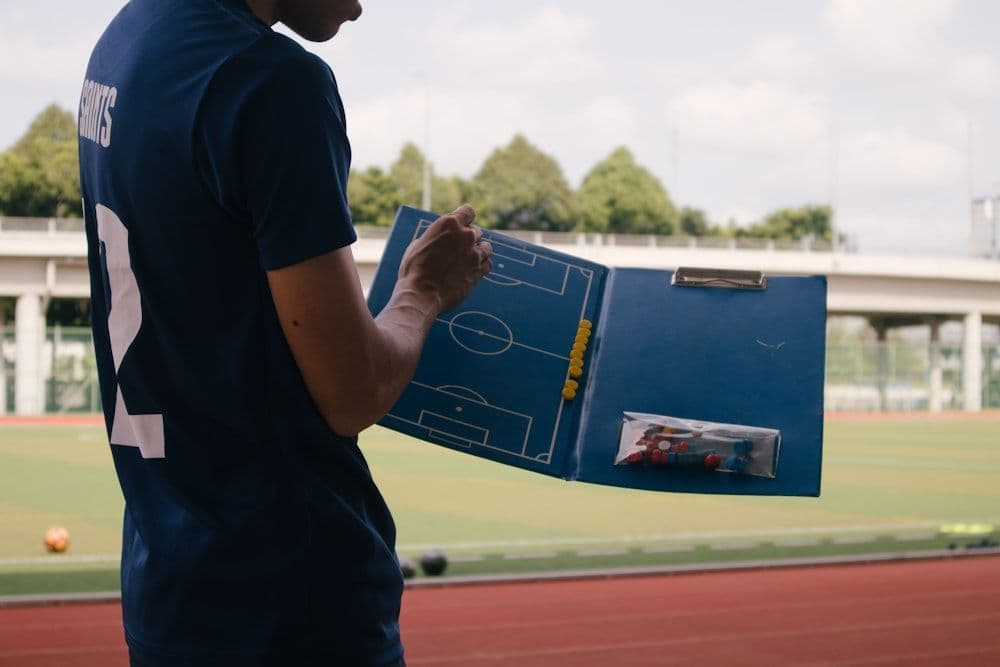
To organize a coaching drill library, start with activities you have run and would use again. Give each one a descriptive name, a complete setup and the information you need to decide whether it fits tonight's group. Then use the collection to build a practice.
You do not need to sort every screenshot, bookmark and old PDF before the library becomes useful. Start with one recent session and make its activities easy to find next time.
Start with the practice you need to plan
Suppose you have eight players, a small area and one coach. If the numbers are still uncertain, collect responses through a team calendar and practice RSVP routine before choosing the activities. You want to work on supporting the player with the ball. A drill called "Great passing exercise" tells you little about whether it fits.
Your immediate questions are practical:
- How many players does it need?
- What are the players working on?
- What space and equipment are required?
- Can one coach manage it?
- What changes if the group is smaller?
Use those questions to decide what belongs in each record. They will serve you better than a filing system built around the order in which you discovered the drills.
England Football Learning's session-management advice recommends developing a small collection of practices that engage your players and returning to familiar activities. The collection below is our practical way of keeping those activities usable.
Give each drill a name you will recognize
A useful name describes the setup or action. It does not need to describe every benefit.
| Hard to find later | More descriptive |
|---|---|
| Tuesday passing drill | Pair passing through gates |
| Good small game | 3v3 to four goals |
| Coach Sam's exercise | Pass and move to the empty corner |
Keep the coaching focus in the instructions as well. The same 3v3 game might help you work on support in one session and defending in another.
Use a theme or tag consistently where your tool supports it. Avoid giving the same idea several labels that you will have to search separately. You can put details such as player numbers and equipment in the drill description rather than turning every detail into a tag.
Make each record complete enough to run
Copy this structure into your notes when you add an activity:
| Field | What to record |
|---|---|
| Name | The activity in words you will search for |
| Players | The number needed and any workable alternative |
| Setup | Area, equipment and starting positions |
| Rules | How to start, score, restart and rotate |
| Coaching focus | What you will watch or help players notice |
| Adaptation | A simpler or more demanding version |
| Review | What you changed when you ran it |
A diagram helps explain positions, but it does not replace the rotation or restart rule. A coach looking at it next month should not have to remember what an arrow was meant to mean.
Here is a short soccer example you can use to test that structure:
Pair passing through a gate. Two players, one ball and two cones. Put the gate between the players. Pass through it, control the ball and return the pass. Retrieve any ball that goes wide and restart from your side. Begin close enough for both players to pass accurately. To add movement, step sideways after passing and return to receive. Widen the gate or shorten the pass if the pair struggles to keep the exchange going.
The example is intentionally small. For a larger activity, include where waiting players go and when they replace the players taking part.
Separate the drill from the way you used it
The drill holds the reusable rules. Your session plan records the group, time allocation and purpose on that particular evening.
For example, the drill might be "3v3 to four goals". The session note could say: "Use the narrower area today. Ask players where they can move after passing. Give the game another block if both groups are involved."
If that change becomes a useful version in its own right, record it clearly. Otherwise, you can end up with several nearly identical drills and no indication of which one you meant to use.
Keep links to outside resources with their source and your own notes. A link to a video is different from a set of instructions you have written and tested with your group. Do not treat other coaches' diagrams as your own work.
Try the library by building a session
Choose activities for the next practice and put them in order. Add time for explanations, drinks and changes of setup. Check the whole session against the available space and equipment.
Use the reusable practice plan template to lay out the session.
This is where gaps become visible. Two activities may both work individually but require different goals, more coaches than you have or a long reset between them.
In CoachTruly's drill bank, you can choose your sport, add drills to a practice and arrange the session without logging in. Add notes describing the version you intend to run. You can also share the practice before signing in. An anonymous shared practice lasts 14 days from its first share. Save it to your account when you want to keep it.
For an activity you need to change, the signed-in drill list offers Use as template to create your own version. Use a clear name and check its visibility before saving. A personal collection does not automatically mean every item is private.
Make one useful note after practice
Record a specific observation rather than a rating alone:
| Vague note | Note you can act on |
|---|---|
| Too hard | Most passes missed the target; begin closer next time |
| Worked well | Both groups restarted without help after the first round |
| Needs changing | Six players arrived; the four-team rotation did not fit |
You can also ask the players what they found useful or difficult. The FA's guidance on player feedback encourages using their perspective when reflecting on and adapting sessions.
At the next planning session, read that note before searching for something new. Keep the activity, adjust it or replace it for a reason.
Build a practice from the drills you want to use next. A short collection that helps you prepare a real session is enough to start.